New Business Unit: Oats
In line with our strategy of sustainable growth and diversification, in 2024 we entered the oats business, expanding our product offering beyond wheat and strengthening our long-term relationships with strategic customers. This new category represents an opportunity in Mexico, where domestic production is limited compared to growing demand.
The oat processing plant, located in Querétaro, features processes for receiving, cleaning, hulling, toasting, cutting, rolling, and packaging, ensuring complete traceability from raw material to final product.
Operational Capacity
+5,000 metric tons of installed capacity per month
+3,500 metric tons of production per month
We serve industrial and self-service customers with a diverse portfolio of whole oat flakes, cut oat flakes, oat flour, and oat bran.
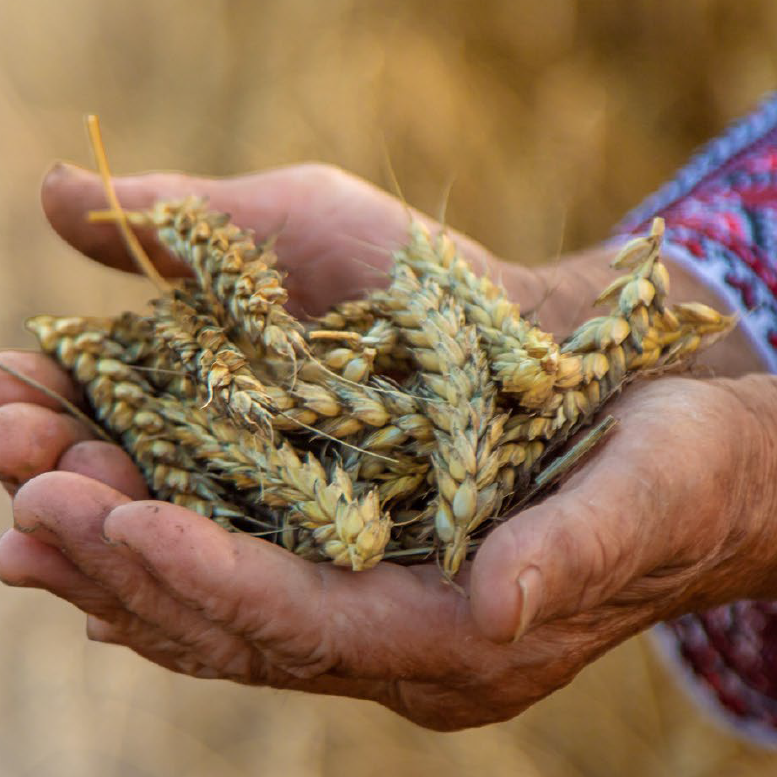
Our initial experience has allowed us to establish a business that has been very well received by the market
. Thanks to the quality and traceability of our processes
, this new venture represents Grupo Trimex’s first step
toward diversifying into grains and strengthening our comprehensive offering
.
Agricultural Development
At Grupo Trimex, we understand that regenerative agriculture is not only associated with soil health, biodiversity, and climate change mitigation; its holistic approach also encompasses the human dimension of agricultural systems. In other words, there can be no ecological regeneration without social regeneration.
To support rural communities, we conducted a drip irrigation pilot project from which we learned several lessons that will help us continue to promote innovative projects in partnership with local farmers. We emphasize the need for a comprehensive assessment, ongoing support and training for the technical team from the outset and throughout each cycle, adaptation to the local production context, and clarity regarding investment costs. We also identified monitoring and evaluation as key tasks for the initiative’s sustainability.
In the Northwest region, we conducted a series of 13 talks and training sessions for farmers, with the aim of strengthening their technical knowledge and promoting more sustainable and safer agricultural practices. Throughout 2024, topics such as cost reduction, labor reforms, conservation agriculture, workplace safety, the use of microorganisms, and innovation in irrigation systems were addressed. These activities, held at strategic locations such as Ciudad Obregón, El Carrizo, and Valle del Yaqui, featured industry specialists and were actively attended by 111 partner farmers.
AGRIBA Sustainable
Partners: PepsiCo, International Maize and Wheat Improvement Center (CIMMYT)
Location: Bajío, Mexico (14 municipalities)
The 2023–2024 fall–winter season was one of the most challenging in the Bajío region due to drought and adverse weather conditions. Even so, the project made significant strides in productivity, resource efficiency, and technology adoption. We achieved an average yield of 5 metric tons per hectare, exceeding the regional average of 4 metric tons per hectare by 25% and resulting in savings of 21.6% in production costs.
- Nitrogen: an 11.9% increase in yield and a 41.5% improvement in the efficiency of
nitrogen use. - Mitigation: a 22% reduction in greenhouse gas (GHG) emissions.
- Water: A significant 10.2% improvement in water use.
We introduced new wheat varieties (V35 and V27) that showed competitive yields, and we recorded a 41.5% increase in nitrogen use efficiency, thanks to innovative fertilization management.
As part of the social component, we held 30 training events that benefited more than 260 participants, including farmers, technicians, and stakeholders in the value chain.
After covering 2,043 ha in Year 1, 4,937 ha in Year 2, and 1,946.6 ha in Year 3, the project has demonstrated a remarkable ability to adapt to different scenarios.
Beyond the area covered, the results confirm that sustainable agriculture can maintain competitiveness even in challenging contexts. The yields obtained exceeded the regional average; efficient use of water and nitrogen made it possible to produce more with fewer inputs; and the practices adopted increased resilience to drought. In summary, the areas under this model demonstrated that sustainability not only protects but also enhances producers’ competitiveness under adverse conditions.
Responsible field
Partners: International Fruit and Vegetable Alliance for the Promotion of Social Responsibility
(AHIFORES)
Location: Northern Sinaloa and southern Sonora, Mexico
We are continuing our efforts to improve working conditions for farmworkers in two areas of the country covering more than 800 hectares.
In 2024, the number of participants remained the same as the previous year. In total, we partnered with six producers: some continued from the previous period, while others registered for the first time to improve conditions in their operations regarding labor rights and compliance with occupational safety and environmental regulations. We held a series of orientation meetings with all of them—both in person and online—as well as field visits where we addressed the topic of labor and social compliance in the agricultural context.
Regenerative wheat
Partners: Grupo Bimbo and the International Maize and Wheat Improvement Center (CIMMYT)
Location: Guanajuato, Sonora, and Sinaloa, Mexico
In 2024, we continued to build capacity aimed at producing bread wheat under local growing conditions and in accordance with regenerative agriculture principles. Throughout the period, we engaged 72 producers from different regions of the country in the process.
Given that the purpose of the initiative centers on capacity building for soil improvement and biodiversity conservation, as well as climate change mitigation, the training sessions during this period covered topics such as:
- Agronomic Management of Wheat
- Conservation Agriculture
- Disease Management
- Specialized Machinery
- Straw Handling
- Cover Crops
- Agricultural Innovations for Fall and Winter
In addition, we organized field tours and demonstration events so that farmers could learn how to prepare their fields, manage crop residues using regenerative practices, and use wide beds.
Hard Red Winter Wheat (HRW)
Partners: Bartlett Grain Company
Location: Kansas, U.S. (9 counties)
In 2024, the project exceeded its goals, with 11% more acres enrolled than expected and a yield of 1.68 million bushels* (approx. 45,900 metric tons), 15% above the target. We highlight the adoption of no-till farming by 75% of producers, which helps conserve moisture and reduce erosion.
The application of fertilizers using precision technologies and at optimal stages allowed for a more efficient use of nutrients, with average yields of 50.45 bushels per acre—higher than the state average of 43. The indicators showed 57% less erosion than the national average and an increase in the soil carbon index, resulting in greater nutrient retention capacity and carbon sequestration.
Biodiversity (69% of potential achieved) and water quality (2.6 out of 4) were also improved, with energy use per bushel 45% lower than the U.S. average.
Soft Winter Wheat (SRW) - Missouri and Kansas
Partners: Bartlett Grain Company
Location: Missouri and Kansas, U.S.
The first year of the project served as a baseline for measuring the impact of sustainable agricultural practices, with a focus on soil health, emissions reduction, and nutrient use efficiency. As a starting point, the initial goal was achieved with 5,964 enrolled acres, resulting in a yield of 556,680 bushels.
During the period, 100% of the fields were farmed under rain-fed conditions (without irrigation) and using a double-cropping system, which maximizes land productivity and improves vegetation cover. Fifty-five percent of the acres were managed using no-till practices and 45% using reduced-till practices, helping to reduce erosion and promote carbon sequestration. In terms of fertilization, nitrogen use efficiency was 20% higher than the state average. Soil erosion was 54% lower than the national average for wheat, and 64% of biodiversity potential was achieved.
With these metrics, the project lays a solid foundation for expansion in the coming months, maintaining the goal of 6,000 acres and consolidating a model that combines agricultural profitability with environmental benefits.
Spring durum wheat (HRS)
Partners: Ceres Global Ag.
Location: North Dakota, U.S., and southeastern Saskatchewan, Canada
In 2024, the program saw a significant increase in the amount of land enrolled, thanks to the participation of producers who implemented a set of practices designed to improve nutrient use efficiency and reduce greenhouse gas emissions.
Variable-rate nutrient applications, efficiency-enhanced fertilizers, and biological seed treatments were used. All registered hectares were managed using reduced-tillage or no-tillage systems, with crop rotations of at least two crops, reinforcing the principles of regenerative agriculture.
The program’s results are significant: on average, 95% of the synthetic nitrogen applied was recovered in the grain; yields were 28% higher than the regional average; and reductions in carbon intensity of up to 21.6% were achieved in areas using efficiency-enhanced fertilizers and 9.7% in areas using variable-rate nutrient application.
1,733 metric tons ofCO2ereduced, equivalent to the consumption of more than 170,000 gallons of diesel.
In February, farmers from North Dakota and Saskatchewan visited to learn about the processes that wheat undergoes once it arrives in Mexico.
Soft Winter Wheat (SRW) - Missouri
Partners: Scoular
Location: Missouri, U.S.
The project, which began in the previous period, focused on improving soil health, increasing biodiversity on the plots, and enhancing carbon sequestration across 5,085 acres of soft winter wheat, using agricultural practices designed to restore the land and make the supply chain more sustainable.
Participating farmers adopted key practices such as crop rotation (2,952 acres), no-till and reduced-till farming, split nutrient application, and the use of cover crops. These measures, combined with efficient fertilizer management strategies, have had a direct impact on reducing emissions and improving soil fertility.
The model’s potential is reflected in the initial results, which show a net reduction in the carbon footprint of 12.34 metric tons ofCO2eper acre compared to the baseline, as well as improvements in soil health indicators, such as organic carbon levels exceeding 3% in the topsoil.
Environmental Management in Operations
Energy Efficiency and Emissions
In 2024, we continued on the path we began after joining the Science Based Targets initiative (SBTi) in 2023, which reinforces Grupo Trimex’s commitment to climate action and science-based emissions reductions.
We conducted our first Scope 3 emissions calculation, complementing the Scope 1 and 2 inventories developed in previous years, which use 2022 as their baseline. This exercise was carried out in accordance with the guidelines of the Greenhouse Gas (GHG) Protocol, with the participation of the Procurement, Supply Chain, Logistics, Projects, Operations, Transportation, Sustainable Development, and Communications departments.
We gained a comprehensive view of our carbon footprint and determined that Scope 3 emissions—primarily associated with the supply chain—account for approximately 92% of total emissions, highlighting the importance of collaboration with suppliers and strategic partners.
The year 2022 marks the starting point for the development of a comprehensive emissions mitigation strategy, which is currently underway. This effort not only strengthens our environmental management but also lays the groundwork for moving toward a more efficient and climate-resilient operating model.
The strategy on this issue is expected to be published by 2025, in order to gain a more comprehensive understanding of the trends in our emissions and the goals we need to achieve.
Water Consumption
Efficient water management is key for the Group because of water’s essential role in raw material conditioning—a stage in which the grain is moistened to facilitate milling. Water is also used for cleaning and general plant operations.
In 2024, of the total water consumed, 50.86% came from wells and 49.13% from the municipal water system.
Waste Management
Since the milling process is efficient and makes full use of the raw material, Grupo Trimex does not generate any production waste. As a result, we have focused on the waste generated in other processes—including packaging and supplies—as well as on standardizing practices across our plants, with the goal of increasing the amount of recoverable waste in the future.
In 2024, we recorded 3,343.21 metric tons of waste from our production facilities (excluding electronic waste), of which 96.45% was non-hazardous waste and 3.55% was hazardous waste. In accordance with the law, we have a temporary storage facility for the management of hazardous waste.
More than 32,000 items, including wooden and plastic pallets, were reused, and the cardboard was sent for recycling (17.12%). Similarly, scrap and metal (3.07%). At the end of the period, 1,736.46 metric tons of waste were sent for disposal, and 52% of the waste was sent to landfills.